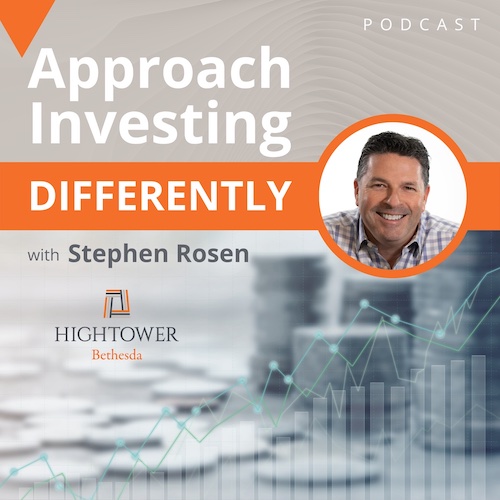
Hedge Funds’ Increased Accessibility: What Investors Should Consider
By Stephen Rosen on April 6, 2023
Previously, hedge funds were only available to big institutions or ultra-high-net-worth individuals who could meet the minimum requirements.
Now, anyone with a much lower minimum can enter this space.
What are the must-knows before investing in this world?
In this episode of “Approach Investing Differently”, Stephen Rosen dives deep into the key considerations for investors, such as understanding liquidity and fee structures. But that’s not all, he also emphasizes the importance of proper education, research, and expert consultation before making any investment decisions.
Don’t miss out on this valuable information to make informed choices and potentially unlock a new realm of investment opportunities.
Stephen discusses:
- How the world of alternative investing has shifted from only being available to institutions and high net-worth individuals to the average investor
- The importance of having a diversified portfolio
- How clearing liquidity preferences before investing may affect your returns
- The criteria Hightower Bethesda uses when investing in alternative funds and what people should consider when investing in this field
- Fees and commissions associated with alternative funds
- Why educating yourself about the investments you are considering is essential
- And more!
Connect With Stephen:
Publishing Tags: Approach Investing Differently, Hightower Bethesda, Stephen Rosen, Investing, Hedge Funds, Alternative Investing, Investing, Real Estate, Private Equity, Private Credits
AID_EP_12
[00:00:00] You invest your money strictly in stocks and bonds. If so, it’s time to change that. Welcome to Approach Investing Differently with me, Stephen Rosen from Hightower Bethesda. I’ve been advising clients for over 20 years on how to invest in alternative investments, and I’ll explain why you should dedicate a percentage of your investible assets to hedge,
[00:00:23] private equity and real estate in order to maximize returns and create a more efficient investment portfolio. Now on to the show.
[00:00:37] Hedge funds used to be out of bounds for most average investors, but over time that’s changed. I’m Patrice Sikora with your host, Stephen Rosen. Stephen, talk to me about the evolution of that accessibility. Well, thanks Patrice, I appreciate it. And for all our listeners, we’re going to try to make this one a little bit more high level, [00:01:00] informational understanding, kind of how things got to where we are.
[00:01:03] Some things to look out for as an investor and some things to look for as an investor. So, you know, the way I kind of look at this is kind of discussing the evolution. Alternatives. And when I, again, when we say alternatives, we always like to talk in, you know, big picture. That’s hedge funds, private equity and private real estate, and kind of the evolution of investment opportunities for institutions.
[00:01:30] Those are insurance companies, pension plans, endowments, migrating all to the high net worth. and how they were able to access those. And now, all of a sudden, you’re seeing what we call Main Street, having the ability to invest in alternatives. Now each of these all have different vehicles and how they’ve been created, and so I think that’s very important for people to understand.
[00:01:54] But initially, it used to be, and this is really something that we talk to [00:02:00] prospects all the time about accessing these investments and they’re always so surprised. They’re like, oh, I thought that was just for the ultra, ultra, ultra, wealthy, or, I thought that was just for institutions. And the truth of the matter is, there’s been a major evolution over time, and what we used to see 20, 30 years ago were truly private investment vehicles that were really only done for.
[00:02:24] As I said, institutions, endowments, and the like, and super high minimums, a million, 5 million, 10 million investments. Clearly those were not accessible to the vast majority of investors. And what we saw starting in the early two thousands, a firm that I used to be at, were a couple of gentlemen
[00:02:44] who recognized that this should be an opportunity set for the high net worth investors. And so, what they started to do is build vehicles for these people to invest and all of a sudden you still needed to be what’s called a qualified purchaser, which means a net worth of 5 [00:03:00] million or more, but what they did is they created these vehicles to invest in these private funds with much lower minimum.
[00:03:07] Maybe 250,000, maybe 500,000. And over the years, even those numbers have come down dramatically where people are accessing them for maybe a hundred thousand dollars. So, it becomes much more available to even your high net worth investors. And you can build diversified portfolios, which is really one of the keys to understand in the success of investing in alternatives.
[00:03:30] So you don’t want to be in a position where you’re only investing in one fund. So, if you have to put too much money, because of a minimum, it might eat up your capital to dedicate towards the alternatives world. And if you’re only investing in one fund, well, is that the right style? Is it the right time for that?
[00:03:49] So from our standpoint, you know, building and constructing portfolios is very important, and bringing down the minimums has allowed us to diversify our clients in a lot of different [00:04:00] spaces. Again, hedge funds, real estate, private equity, and then the different nuances and sub-sectors into each of those categories.
[00:04:08] So the more you can diversify, the better off you’ll be. And so that was something, yeah, just to jump in quickly. Think the accessibility has diluted the value of these vehicles? Good question. I think in certain instances, yes, as you go lower down the food chain. So, I think that if you’re still looking in the private world where high net worth individuals, qualified purchasers are swimming in a world of
[00:04:42] endowments and pensions. Mm-hmm, I don’t necessarily think you see massive dilution, but what I will say, and this is something that we’ve talked to our clients about and people who come in the door, which is if we are, I don’t know, bringing [00:05:00] in 80 or 90 million in net new assets a year, and we’re trying to dedicate on average 30% of those to altern, that’s 24 million a year that we at Hightower Bethesda are trying to allocate to alternatives.
[00:05:17] It’s a very manageable number to do sticking with super high quality investments, and when I say high quality, and we’ll talk about this later, Top quartile funds on the private equity and private real estate side, maybe top 10%, in terms of performance historically on the hedge fund side. So, I think that when you don’t have to allocate hundreds of millions and billions of dollars, I think it’s very easy not to be diluted.
[00:05:47] When you are the California State Teacher’s Pension, and we’ve talked about this I believe in prior podcasts, and you’re having to dedicate hundreds of millions of dollars every single year, and your top tier [00:06:00] funds, private equity, real estate, and hedge funds are closed to new capital. Yes, you all of a sudden have to drop down to tier two and tier three just because your mandate says we need to put money in alternatives.
[00:06:14] And so I don’t know if it’s a diluted effect, but I do think it’s something that has a negative impact. On the space and performance for those who have to drop down to tier two and tier three. So, I think it’s a very valid question. And I do think it’s something that occurs. I think we’re fortunate enough that we still swim in a pool that we can still access good high quality managers without having to drop down.
[00:06:44] Okay. Because we won’t drop down. We’ll just sit tight. Gotcha. Alright. Okay, so moving on. So now what we’ve seen is this world has sort of been created, where we did drop down and, and provide some access to the high net worth investors to [00:07:00] these types of funds. And then you’ve seen more companies, and we talked about this a little bit with the interval funds in some of our prior podcasts where they’ve created a little bit more of a liquid fund for even lower minimum.
[00:07:16] Okay. And lower qualifications, and that to your point is where, you know, you start to have to maybe sacrifice what you’re investing in because maybe the idea that you have to provide more liquidity requires for your investors requires that you may be invest in different things. And so, we generally see a little bit lower levels of returns on the interval funds and the funds that are more liquid than what we see on the traditional private side.
[00:07:47] And then you drop down to mutual funds because some people want full liquidity. They don’t want to be. And so, they want to access that. And the mutual fund companies have tried to [00:08:00] capitalize on that. And now we’ve discussed in prior podcasts, again, those really don’t work so well. They work well in a very small select handful of spots, which again, we think we’ve located, but we also know what to avoid and what doesn’t work in a fully liquid environment.
[00:08:18] And so that, again, to your point, of dilutive returns or reduced returns. Again, we see reduced returns even further when you start dropping down into the mutual funds. So yeah, for us, the most success ends up being on that institutional level. But we’ve seen a major evolution that a lot of these funds were only accessible to institutions.
[00:08:39] They then migrated to the high net worth investors and then to my point, now all of a sudden we can start to see them, uh, on Main Street. Well then what should somebody look for when they’re looking at an alternative investment? What are the things to keep front of mind? So first and foremost, and this is a general philosophical view we have at Hightower [00:09:00] Bethesda, which is we really don’t do any new funds.
[00:09:04] All right? We’re not believers in, when you say new funds, what do you mean? Meaning a company or maybe some guys left or women left a prior, private equity fund or private hedge or prior hedge fund and decided to take their track record with them and they go and start up their own shop.
[00:09:23] We’re not big fans of that. It’s one thing to manage money and be really, really, good at it. It’s another thing to manage a company. Mm-hmm. And when you are someone who came in invested, found companies to invest in and didn’t have to worry about anything else, and that was the only thing you did. Okay.
[00:09:41] That’s fantastic. Really good at that. Once you start getting distracted, maybe you have to take away from some of that investment duties, have to allocate that time to other places. In terms of raising money, in terms of running a business, dealing with people, all of a sudden, your primary focus isn’t [00:10:00] on the investment side of things and you have other people who might be doing that as well.
[00:10:04] We sometimes see performance not really match up what it used to be, and so we’re not big fans of investing in brand new funds and brand new shops, so to speak. Once we do invest in somebody, we want somebody who’s got a good long track record, and those are very easy to find. You know, you have people who, particularly if you’re investing in a firm in there, third, fourth, or fifth fund, clearly there’s a lot of track record there for you to see.
[00:10:33] And that to us is very important because if you’re good at what you do, generally speaking, the private markets, you don’t go stupid overnight. That’s just the reality of it. And if you have a consistent and repeatable process, it generally works. And so that for us is making sure that you’re dealing with people who have good track records.
[00:10:52] Generally, you know, historically top quartile, in terms of private equity and private real estate returns. You know, sometimes you can fall into, you know, a top [00:11:00] 50% just because there could be decimal points that get you from, 24% to 26%. We’re not going to knock somebody out for being there.
[00:11:09] And we understand that having done this for so long, we’re traditionally really looking for managers who have good long standing track records, we also want consistent management. Okay. Trying to avoid funds and companies where there’s been major turn because even if you have the same company label or fund label, if there are different people who are making the decisions, the prior track record is somewhat irrelevant.
[00:11:37] And so you have to be mindful about that. So again, understanding and doing the due diligence on who you’re investing with is exceptionally important. And if you’ve got good consistent management teams, the nice thing about that is they’ve figured out a way to work. and a lot of times they’re able to, you know, somebody can stick up in the room and say, Hey, no, that’s not a good idea.
[00:11:59] Right? [00:12:00] And, there can be a constructive back and forth without having all yes men around who are new people to, you know, to one person who’s now making the decisions. Because the people who used to, you know, go, I don’t go to battle, but you know, have these constructive conversations are now
[00:12:17] right? And so, there’s nobody checking that person. So, I think that’s very important and also I think really important, very underestimated is truly, truly, truly understanding the objectives of the fund and how they fit with your objectives. Okay. When clients come to us, one of the first meetings we have is what we call our FIT meeting.
[00:12:39] And our FIT meeting is basically getting an understanding from the client what it is that they’re looking for, what do they, we tell them what we do. We don’t, we can tailor investments a little bit to what they want, but what we do is very specific and we’re not going to change what we do. And we’ve expressed that.
[00:12:59] Mm-hmm. And so, the [00:13:00] question is, what are you looking for, does that match what we do? And are we a fit? And if we are, then we take the conversations further. If not, we just happily decide to part ways and understand that everybody’s not for us. And we’re not for everybody. We’re okay with that. We understand that.
[00:13:16] I mean, that really is the same thing as far as looking at a fund. You have to understand what the objectives are of the fund and do they work for you. Great example. You might want to invest in real estate, but you also need cash flow, so is that fund that’s going to invest? And, and there are many of them out there, let’s say in a multi-family, you know, multi-family fund where there’s a lot of income generation, but they’re utilizing that income to maybe make other investments, cover operational costs.
[00:13:50] They’re not going to be distributing that. Well, you thought your objectives were met because you were investing in income producing real estate, but the fund’s not designed to [00:14:00] distribute that income. That’s right. So again, your objectives are not matching up and that’s, you know, goes deeper and deeper as you get more specific with the funds.
[00:14:10] So, I think those are some really important pieces to make sure that you understand before you make a decision on your own, which we generally don’t recommend, but if you choose to go in on your own, I think those are some pretty basic principles that one might want to take a look at. With that in mind too, what are some other things that you should be mindful of, specifically you’ve mentioned in past podcast two fees.
[00:14:36] Mm-hmm. So, I think as things have evolved, the institutional side of alternatives is stable in terms of how those fees have been structured. And that’s one of the reasons why we traditionally like to stay in that world. And we stay in that world primarily because [00:15:00] they have some power. They have a lot of money that they invest and they have the ability sometimes to dictate terms to a fund that then get passed down to the high net worth investors.
[00:15:11] And so we like investing alongside of those people. And traditionally there’s a management fee there, you know, we’ll talk about how they get compensated, but there’s usually a management fees as well as performance fees. And I’ll get to that in. So, one of the things we worry about that we see a lot as things have come down to Main Street, Main Street traditionally is not super aware and sophisticated a lot of times with respect to fees.
[00:15:39] And unfortunately, they’re also not always disclosed as well as they probably should be. And so the one thing we always tell people to, you know, be mindful of, and we’ve seen this clearly accounts that we take over, are very high upfront fees. Okay, whereby there’s a large selling commission paid to [00:16:00] the advisor.
[00:16:01] Now we do not participate in any of those funds. We are only an advisory fee, advisors. So, we only get paid what we charge our clients on a quarterly basis. But there’s a lot of these alternatives that are out there with very high upfront commissions, and the advisors get paid a lot of money for them to sell them, and you have to be very mindful of those.
[00:16:24] And then at that point in time, keep in mind that when you do have that high upfront commission and those high fees inside of them, what happens is less of your money as an investor is going to, so that inhibits your return across the table. So be very mindful of that. Then understanding how the managers themselves get paid.
[00:16:43] And this is very important because you always want to make sure that you are aligned with the managers. Okay? All our funds were limited partners. Okay. We all own a piece of the fund. And understanding how the general partners get paid is key, and [00:17:00] they’re always going to have, in most instances, some level of a management.
[00:17:04] Okay, let’s remember. They need to turn the lights on in their office. They need to pay people to do research on the investments that they’re looking at. They have costs to go visit companies that they want to invest in. There’s costs to run a business, and they need to cover those costs.
[00:17:20] The question though is, are there management fees exorbitantly. Or they moderated around, you know, a one or one and a half percent range. And the real way these guys make their money is what they call incentive or performance fees. Okay. Essentially, meaning they get a piece of the profits and that’s what you want.
[00:17:40] It makes sense. Okay. If they’re going to make hundred percent make sense, they’re going to piece of the profit, they’re going to want that profit, they’re going to make it bigger. Exactly. And so, most of the times, the funds that we have, have some level of minimum. You know, usually what they call a preferred rate of return.
[00:17:55] And if they exceed that preferred rate of return, then they begin their profit share. And [00:18:00] that’s very normal. And depending upon the success of the hedge fund or the success of the private equity or real estate fund itself, they, you know, the splits will vary. We’ve got funds where it’s a 60 40 split.
[00:18:14] We have funds where it’s an 80 20 split. Usually, those bigger numbers are going to our clients, the limited partners. But again, that’s how these managers and these fund companies make their money. And you want to be on the same side of the table as them, and more importantly, you want them on the same side as your table.
[00:18:32] If they’re just charging a management fee, then there’s not massive incentive for them to or succeed. Okay. They’re just going to collect their management fee, do a mediocre job, and go on. We want people who are going to really make money when we make money. You want them to have skin in the game, big time. Skin in the game.
[00:18:50] 100%. And then the other thing to be mindful of is, you know, what we call the life cycle. And again, we’ve talked about this liquidity of a fund and [00:19:00] the reason why there’s been this popular migration to these more liquid funds is because people don’t like having money tied up for 7, 8, 9, 10 years, regardless of whether it’s a hundred thousand dollars or $500,000.
[00:19:17] They don’t like having the money tied up or $5 million. And I get that and we understand. But again, liquidity does create a liquidity premium. And we do feel that Illiquidity does present your present clients with the opportunity to make more money because they’re able to own things for a longer period of time, and that’s a value there.
[00:19:38] But clients have to understand that. And again, particularly for those who are going into these things on their own, because they are very accessible, as we’ve talked about, to main. and when Main Street invests in illiquid funds and they don’t understand the terms of the liquid, the liquidity terms of the investments themselves, [00:20:00] it kind of creates a little bit of a black eye for the industry.
[00:20:04] People get frustrated that they can’t get out, and so you need to make sure that you understand when you can get your money out, how often you can get your money. and what happens if you can’t get your money out when you want to, and that’s very important. And so, as I’ve said, there’s been this goal of, simplifying the investment process for alternatives.
[00:20:31] And I’m not a hundred percent sure it’s always to the benefit of the investor. I think sometimes in certain instances, they’re better off just not doing, if you can’t do it the right way. But as I said, there’s been this massive evolution and it started, you know, 40 years ago for private institutions and endowments made its way to the high net worth space and now it’s made [00:21:00] its way to say, now it’s made its way to Main Street and it’s just something to be very mindful.
[00:21:05] Stephen, you have done a fantastic job over the last several podcasts of explaining private equity, private credit, alternative investments. This just wraps it up with a bow. Is there anything you haven’t touched on that you want to make sure you just mentioned to listeners? No, I mean, I think, we’ve done a lot of detailed podcasts over the course of the past year that I hope people have found helpful and insightful.
[00:21:32] You know, I think the last two podcasts are designed for people who are trying to potentially do this on their own. Again, I strongly advise, I advise against it. I think you need people who understand these types of investments to do them correctly because there are nuances to all of.
[00:21:57] And if you don’t have the people who are really educated [00:22:00] and sophisticated in these funds and these investment strategies that can help guide you, I think you end up finding yourself in a spot that you probably become uncomfortable with. And look, we run up against this at certain points in time, but a lot of times with new investors, new clients, prospects, whereby again, we talk about this, why would I do this?
[00:22:28] I’ve read x, y, z story about this fund and a, b, c story about that fund. And, you know, it’s bad. It’s bad, it’s bad, it’s risky, it’s risky, it’s risky. And this is where I come back and I say, the internet is a very scary thing. There’s a lot of information out there. And hopefully we’ve all learned that not all of it is
[00:22:46] but some of it is, and if you’re going to go, if you’re going to swim in the deep end of the pool, you better know how to swim. And if you don’t, make sure you have a lifeguard with you. Okay. Absolutely. And we can be those [00:23:00] lifeguards to help protect you and under and help you navigate these waters because, as they’ve become it’s almost
[00:23:10] Mutual funds had become over the years, okay? People used to pick and choose individual stocks, all right? And then we went to, you know, mutual funds and now subsequently more indexing. And, you know, I’d look at a client’s 401k. I’ll give you a great example. Look at a client’s 401K account, all right? And the client says, I’m diversified.
[00:23:32] Or you look at a prospect and you say, let me just, you know, review your 401k account. No, I’m good. I’m diversified. You know, you open up an account and they’ve got six funds in there, and they see, I told you I, I’ve got six different investments. And then you actually take a look at what the investments are.
[00:23:52] It’s a large cap growth, another large cap growth, another large cap growth, a small cap growth fund, the small cap growth fund, and then a mid-cap growth fund. [00:24:00] And you’re like, Mr. Prospect, Mrs. Prospect. You’re not diversified. Just because you own six funds doesn’t necessarily mean you are diversified.
[00:24:12] You’re completely overweight. Growth in taking on way more risk than you ever anticipated. But they don’t know because it’s a 401K plan and many times they’re going it on their own. And when people go at it on their own in areas that they’re not super familiar. Problems arise. You end up taking on risks that you’re not really understanding, and so unintended consequences occur, and it’s the same thing that’s happening with this evolution of alternatives.
[00:24:43] If you create things that are completely available to every investor that they can go access on their own account at Fidelity or Schwab or E-Trade or whatever, they want to go manage their own and they go and they [00:25:00] start purchasing these investments thinking that one thing is going to occur when maybe the complete opposite thing occurs.
[00:25:07] You’re creating a scenario whereby you put more black eyes on the industry. And so, I think it’s very important for, you know, the powers that be to make sure people are educated. But I really think it’s very important for the average investor to have some own self-accountability if you’re going to choose to go at it on your own to really make sure you understand what it is that you’re putting your money into.
[00:25:32] Because if you don’t, you truly only have yourself to blame. And then for advisors who are out there, make sure you educate yourself. Make sure you understand the nuances of what you’re recommending to your clients. Don’t just answer a call to action when your client says, hey, I’d like to have some real estate, and just say, oh yeah, the wholesaler from X, Y, Z company was just in my office talking about their great fund.
[00:25:57] We can buy that. [00:26:00] Understand what it is that you’re recommending to your clients because we’re all going to get hit if people don’t do. and it just makes, you know, it makes my job harder every single time there’s a problem that someone didn’t understand and why they invested in something or put their clients in something that they didn’t understand or fully explain to their clients or why individual retail investors invest in something, not understanding what it is they’re investing in.
[00:26:28] And maybe it goes south, it doesn’t perform, you can’t get your money out. All the things that are in the world of alternative investing, but you’re doing it on your own and you’re not understanding and following, like I said, understanding, you know, who’s managing it, understanding the liquidity terms, making sure you’re investing with people with good, long, stable track records.
[00:26:51] Don’t take back data. Data. It’s irrelevant. Okay? Everything is backdated, everything is back tested. Doesn’t matter, okay? Understand that [00:27:00] when people start up their own shop, past performance. Look, past performance in general is not indicative of future performance. Okay? But past performance is really not indicative of future performance when you completely change the constructs of how you’re investing.
[00:27:17] And so there’s a lot of things that are out there, and it’s great that Main Street can access some of these things. It’s great that the minimums have come down for a lot of these investments because it is super important. For them, the average investor to have access to these things. Okay? They don’t necessarily need to be strictly for institutions and ultra high net worth investors.
[00:27:44] There really should be a world where the average retail investor can get access to these types of investments that are truly designed, you know, for the institutions and the high net worth that doesn’t. And so, the things that they’ve [00:28:00] created I think are just like you were saying, a little diluted, but there’s ways, if you know what you’re doing, to still build, to make it work, quality portfolio and make it work.
[00:28:12] Well, Stephen, how can someone reach you? Because I’m sure there are lots of wheels turning right now. As usual, we always say the best place is our website, hightowerbethesda.com. You can listen to all of the different podcasts that we’ve created, you can see what we do, who we work for, get an understanding about.
[00:28:33] our equity portfolios and our fixed income portfolios and how we work there. You know, as I said, read our quarterly newsletters, get an understanding about our vision on the market, how we look at things. And if you think that we’re a fit, please pick up the phone. Give us a call, shoot us an email. We’d happy to set up some time to meet.
[00:28:51] All right. Follow this podcast, learn something, and please share with others. Thanks for being with us.[00:29:00]
[00:29:03] Thank you for listening to Approach Investing Differently. Don’t forget to follow the podcast to be notified whenever a new episode is released. Hightower Bethesda is a group comprised of investment professionals registered with Hightower Advisors, LLC and SEC, registered Investment advisor. Some investment professionals may also be registered with Hightower Securities, LLC.
[00:29:24] Member FINRA and S I P C advisory services are offered through Hightower Advisors, LLC. Securities are offered through Hightower Securities LLC. This is not an offer to buy or sell securities. No investment process is free of risk, and there is no guarantee that the investment process or the investment opportunities referenced herein will be profit.
[00:29:45] Past performances neither indicative nor a guarantee of future results. The investment opportunities referenced herein may not be suitable for all investors. All data or other information referenced herein is from sources believed to be reliable. Any opinions, news, [00:30:00] research, analysis, prices, or other data or information contained in this presentation is provided as general market commentary and.
[00:30:07] Constitute investment advice, Hightower Bethesda, and Hightower Advisors, LLC or any of its affiliates, make no representations or warranties expressed or implied as to the accuracy or completeness of the information or for statements or errors or omissions. Or results obtained from the use of this information.
[00:30:26] Hi, Tara Bethesda and Hightower Advisors LLC assume no liability for any action made or taken in reliance on or relating in any way to this information. The information is provided as of the date referenced in the document. Such data and other information are subject to change without notice. This document was created for informational purposes only.
[00:30:46] The opinions expressed herein are solely those of the authors and do not represent those of Hightower Advisors, LLC, or any of its affiliates.
Hightower Bethesda is a group comprised of investment professionals registered with Hightower Advisors, LLC, an SEC registered investment adviser. Some investment professionals may also be registered with Hightower Securities, LLC (member FINRA and SIPC). Advisory services are offered through Hightower Advisors, LLC. Securities are offered through Hightower Securities, LLC.
This is not an offer to buy or sell securities, nor should anything contained herein be construed as a recommendation or advice of any kind. Consult with an appropriately credentialed professional before making any financial, investment, tax or legal decision. No investment process is free of risk, and there is no guarantee that any investment process or investment opportunities will be profitable or suitable for all investors. Past performance is neither indicative nor a guarantee of future results. You cannot invest directly in an index.
These materials were created for informational purposes only; the opinions and positions stated are those of the author(s) and are not necessarily the official opinion or position of Hightower Advisors, LLC or its affiliates (“Hightower”). Any examples used are for illustrative purposes only and based on generic assumptions. All data or other information referenced is from sources believed to be reliable but not independently verified. Information provided is as of the date referenced and is subject to change without notice. Hightower assumes no liability for any action made or taken in reliance on or relating in any way to this information. Hightower makes no representations or warranties, express or implied, as to the accuracy or completeness of the information, for statements or errors or omissions, or results obtained from the use of this information. References to any person, organization, or the inclusion of external hyperlinks does not constitute endorsement (or guarantee of accuracy or safety) by Hightower of any such person, organization or linked website or the information, products or services contained therein.
Click here for definitions of and disclosures specific to commonly used terms.
Learn More About Hightower Bethesda

7200 Wisconsin Ave
Suite 910
Bethesda, MD 20814
Office: (301) 202-3585
Toll Free: (888) 850-5584
Legal & Privacy
Web Accessibility Policy
Form Client Relationship Summary ("Form CRS") is a brief summary of the brokerage and advisor services we offer.
HTA Client Relationship Summary
HTS Client Relationship Summary
Securities offered through Hightower Securities, LLC, Member FINRA/SIPC, Hightower Advisors, LLC is a SEC registered investment adviser. brokercheck.finra.org
©2026 Hightower Advisors. All Rights Reserved.