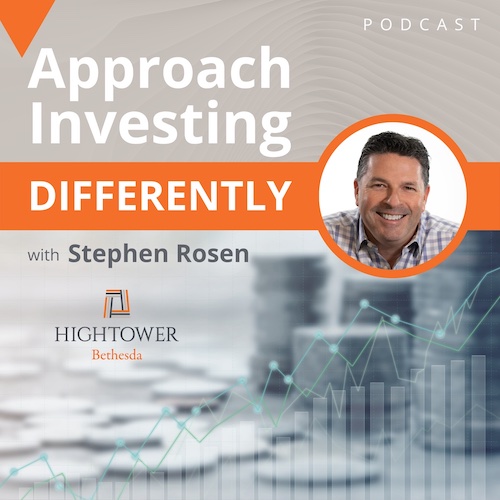
Introducing Clients To Alternative Investments
By Stephen Rosen on February 2, 2022
Getting clients to understand and buy into alternative investments is a huge part of the process of including this asset class in your overall portfolio.
In this episode, Stephen Rosen explains how he does what he does. Stephen walks us through what the experience is like for a customer reaching out to him for the first time, and explains how a first and second meeting is conducted. Stephen also shares how he introduces clients to alternative investments and helps them understand the objective of including them in their portfolio.
Stephen discusses:
● What a client can expect when first contacting his team
● What the first meeting is like and why it’s important to Stephen to have couples on the same page
● How Stephen introduces clients to alternative investments
● And more
[00:00:00] You invest your money strictly in stocks and bonds. If so, it’s time to change that. Welcome to approach investing differently with me, Stephen Rosen, from Hightower Bethesda. I’ve been advising clients for over 20 years on how to invest in alternative investments. And I’ll explain why. You should dedicate a percentage of your investible assets to hedge funds, private equity and real estate in order to maximize returns and create a more efficient investment portfolio.
[00:00:30] Now onto the show.
[00:00:35] welcome back to approach investing differently. In the last episode we learned about Stephen Rosen and his practice. This time, we take a deeper dive into how he does what he does. I’m Patrice Sikora, Stephen, before we get going, remind us who your ideal client is. Um, I’d probably say our ideal client is traditionally a business owner or an entrepreneur, sometimes a corporate [00:01:00] executive, but at the end of the day, people who value the advice that we can give are interested in a, in a little bit of a different method of investing.
[00:01:10] They want something other than stocks and bonds. Um, they want access to private equity. They want access to private real estate and hedge funds and just feel and understand that at the end of the day, There’s the proverbial, like what we’d like to say, the third leg of the stool from investing and that becomes stocks and bonds and then alternative investments.
[00:01:30] Once you’re there, if you understand that process and what we’re, we’re looking to achieve, you’ve got a good long-term outlook. We’re not worried about what’s going to happen today. We’re looking forward at what’s going to happen tomorrow. That’s traditionally our ideal client. All right now, what can a client expect when they contact you for the first time?
[00:01:48] This is not the meeting. This is just contacting you saying, ah, I heard about you. Talk to me. Um, I think we’re going to give them, cause I actually just did this a few minutes ago. We’re going to, [00:02:00] we’re going to give them a good overview of what to expect. Um, and I think that’s your question. What do you expect?
[00:02:05] Well, some number one, you’re going to get great. I think one of the things that we pride ourselves on besides, uh, any access to investments or any investments themselves is a level of service that they’re probably not used to. Um, and the reason for that is we’re big believers that the end of the day clients don’t leave because of performance.
[00:02:25] They leave because of sir. Um, and so that’s why we’ve invested a lot of time, effort, energy, capital, and manpower into making sure that we are fully staffed. Um, we hire ahead of growth and as we anticipate and see the horizon and we see new clients coming in, we want to make sure that we’re appropriately staffed so that everybody has.
[00:02:47] Uh, a great experience because we think that’s one of the most important things. And so we’ll talk to them about that. And then we’ll obviously have great conversations about our investment philosophy and again, the utilization of alternatives and how they fit into a [00:03:00] portfolio. They can expect from alternatives because a lot of people don’t really have a great understanding about alternatives.
[00:03:06] They don’t really understand what to expect. All they really know is what they. Read about it and the papers, what they see about on TV. Um, and you know, like everything else, you can’t always believe what you read or see or hear. And so from that standpoint, we’ll really try to give them an overview. We’re not going to get too much in the weeds because nobody wants to be in the weeds on the first day.
[00:03:27] Um, but eventually, and sometimes they don’t, they never want to be in the weeds. Um, but you know, that’s a client. Uh, situation, but we try to educate them as to the process and the who’s and the Watson, the wise and the house, because we do think at the end of the day, what we do is different. What we do is unique, and we want you to understand why, because if you can understand why you then begin to appreciate it, and then our conversations just become very different in the, in, in the prospecting process.
[00:03:55] And then even at. The person they speak to on the phone for that first [00:04:00] call, will that person follow them through the process? In all fairness, it depends upon the client. We have five different advisers here. Some of us are taking on new clients. Others are not, some of us will know. We talked about, I think a prior episode, generally our minimums and million dollar.
[00:04:18] So we have a couple of advisors who will handle a counselor on the lower side, and then we’ll have advisors who, you know, will handle accounts on the higher side, who are a little bit more sophisticated traditionally, the way we do like to structure it is once we have an understanding about the client and what the potential is, we with.
[00:04:36] From the beginning, assign an advisor to them because to your point, we never want to be in a position where one person is taking them through the process and they feel that that’s the person they’re going to be working with. And then they sign up and we’re like, okay, thanks for coming on board here’s advisor B.
[00:04:58] Exactly. The truth of the [00:05:00] matter is, is this is besides a service business, it’s a communication business. And we have to understand that clients become comfortable with somebody because our investment process for everybody is exactly the same. What’s really important is whether or not you can develop a relationship with that person.
[00:05:19] If you end up. Taking an advisor say for, say me taking a client through the entire process of teaching them and understanding and educate them about what we do and we hit it off. But yet at the end of the day, I’m not going to be the advisor. It’s kind of disingenuous. And more importantly, we want to make sure that the advisor and the client or the advisor and the prospect.
[00:05:44] Are going to be able to develop a personality that there’s going to be a fit there, right from the get-go. Once we understand who the client is, what their objectives are, what they’re looking to do, what maybe some of their personality traits are and how maybe they will work with different people [00:06:00] and maybe the nuances of their individual situation.
[00:06:03] They’ll be assigned that advisor who will walk them through exactly what we do. And that will be the person who will stick with them going forward. Which brings me to the first actual meeting. Are they a little surprised at the amount of information you want? Do the spouses have the same goals? Well, so those are two totally different questions
[00:06:23] So the second one’s a little bit more complicated. The first one, look, we don’t want to inundate anybody with massive amounts of information overload to start. Um, I think we’re very cognizant about that, but at the end of the day, because what we do is somewhat different. We want to try to provide them with enough information so that they can understand why we’re doing things.
[00:06:48] And it’s not always so easy to take a 50,000 foot view of alternatives. You might have to go to 15 or 20,000 feet. We’re not going to [00:07:00] get grounded. But we are definitely going to do what we can to give them some insight into what it is that we’re doing and why we’re doing it because it’s not just plain vanilla stocks and bonds.
[00:07:11] So we’re going to educate them. They’re going to walk away with information and they always know they can reach back out to us and we can have any conversation we want and get into more detail. If they want to. With respect to partners, that’s a totally different story because many times they’re aligned with what they want.
[00:07:29] And many times there are. That could be anywhere from risk objectives, future goals, concepts of spending money, all the different things that you would imagine them coming to a meeting with. And, and what has gone on in their home from day one, with their conversations about these topics, they bring right to us.
[00:07:51] Helping them navigate and helping them understand and helping them get to a commonplace if possible, I think is [00:08:00] really, really important. You want them to be on the same page because if they’re not. One might be unhappy. One might be happy. You’re always trying to get one to go along with the other. And I think at the end of the day, if we can get everybody on the same page and a lot of time, that means getting maybe the more conservative person to be a little bit more aggressive, maybe getting the more aggressive person to be a little bit more conservative, but just really building that relationship.
[00:08:30] And, and getting them to understand what our objectives are, which is to get everybody on the same page and be able to talk through things. So we can have an open dialogue, not just today, but tomorrow because people’s objectives then change six months from now. I mean, we always like to say every financial plan we do is outdated.
[00:08:46] The second we present it to you, markets move, people get more income, all sorts of varying reasons. After that first meeting, when you have a second. Is there a [00:09:00] demonstrable change in attitude? No, I don’t think so. I think until people actually come on board or maybe go through the financial planning process, which is never in the first meeting and we kind of ask them to open up the kimono for a better lack of words.
[00:09:17] Right. We like to kind of get people to understand that we are essentially your financial doctor and we’re going to ask you questions. If you’re not honest with us and you’re not open with us and you don’t disclose everything, we can’t really fully do the job that we want to do. And again, that comes back to, are we a fit?
[00:09:38] Are we not a fit? If we’re going to talk to somebody and sit down with a prospect and they’re going to be very coy about what their objectives are and what their net worth is and where their investments are. And it’s always going to be a struggle to understand. Where they are and what they want.
[00:09:54] Probably not a good fit for us. And we’re okay with that different strokes for different folks. But at the [00:10:00] end of the day, They’re open and we can have this great communication and they can understand that we’re all just here to help them. I think that’s when things start to change, when they realize that we’re just a little bit different.
[00:10:13] I think when they realize it’s not us selling them something. And I don’t think people because of their, I think, experiences with others. Advisors or advisory firms where I think they always feel like they’re being sold something until they sit down and recognize that that’s just not our MO. I think it takes a couple of meetings or maybe even just the initial meeting to recognize that.
[00:10:36] And that’s when I think the attitudes and everything changed. I love the comparison to being a doctor because you do have to answer some questions that might make you uncomfortable. Yes. But you need that information. And as you say, if your coin, you don’t tell the truth, you’re not going to get a good outcome.
[00:10:54] No. If ands or buts about it. Yeah. All right. How do you start explaining alternatives, [00:11:00] alternative investments to these people. I think, as I said, we started at 50,000 feet and then we come down based upon their appetite for more information. I think the key is to try to be as basic as possible in the beginning and give them the brief overview.
[00:11:15] We really try to sick to within the constructs of our alternatives portfolio. The three basic categories. Multi-strategy hedge funds, private equity and private real estate. And again, with a lot of our clients being business owners and very successful before they even walk in the door, most of them have probably had either some Xperience or knowledge of private, real estate.
[00:11:40] Maybe they’ve invested in a building or a property with a friend or a family member or at a country club, private equity they’re business owners. So if you’re a business owner, Private equity is just finding someone to invest in your business and helping you grow it. It’s very easy for them to understand and appreciate that, and also appreciate the nuances of [00:12:00] how we think about private equity and why we think it’s so valuable and why it’s so different than public equities.
[00:12:07] These, we can talk to the business owner and say, Hey, are you making business decisions based upon next quarters earnings? Or are you making business decisions that you think are going to be to the benefit of your business? 2, 3, 4, 5 years out. And inevitably every business owner says 2, 3, 4, or five years out, no business owner who’s running a good successful businesses, worried about one quarter to the next.
[00:12:31] When we have those types of clients in front of us, and it’s the same thing, you know, with a corporate executive, when they’ve got that experience, those two conversations, the private equity and the private real estate, very simple, very easy, many times they’ve got all their own tangible experiences with it.
[00:12:47] The hedge fund conversation, definitely a little bit more difficult to educate in the beginning. And again, we don’t like to sell performance. What we really try to do on the hedge funds. I just really talk about downside protection. And we try to [00:13:00] show them examples of different periods of time for the markets that have been in turmoil and show them how these things have performed.
[00:13:08] And then we also show them what happens in huge upswings of the markets and how they perform. And by the way, The obvious swings of the markets. Those hedge funds will always trail they’re designed to do it. We don’t want them keeping pace with it because they’re keeping pace with on the upside. They’re going to keep pace with it on a downside.
[00:13:26] So I think educating them with tangible data that they can look at and get their hands around and their arms around and just kind of understand what it is they’re supposed to do. Then you can talk a little bit about the strategies that they employ. And how they create those returns. I don’t like saying that we, we, we sell the hedge funds or we, we educate the hedge funds based upon performance, but because downside protection is such an integral part and lack of volatility is such an integral part.
[00:13:57] I think getting them to buy [00:14:00] into that is very important. And then you can talk to them about how they do it. So hedge funds are helpful because of the downside risk and the lack of volatility that we have with them. From our standpoint, again, educating the clients through data that they can understand versus strategy, which is a little bit more difficult.
[00:14:23] I think at the end of the day, gets them to understand what the objectives are here. And then we can talk a little bit more in detail how they get there. All right, Stephen, how can listeners read? They can call us at Hightower Bethesda, (301) 202-3582. We always suggest that maybe people visit our website Hightower, the festa.com.
[00:14:49] That’s B E T H E S D a. We always think getting there, taking a look at who we are. We’ve got a lot of white papers. That are up, that people can kind of take a look at [00:15:00] understanding our strategies, take a look at some of the blogs that we’ve written easily, get links to all the podcasts that we do. And I think educating about who we are and what we do is always a great resource even.
[00:15:12] To giving us a phone call or dropping us an email, outstanding Stephen Rosen, the host of approach investing differently, follow or subscribe to this podcast to make sure, you know, when the latest show is available and share with friends and colleagues, I’m Patrice Sikora. And let’s talk again later.
[00:15:31] Thank you for listening to approach investing differently. Don’t forget to follow the podcast to be notified. Whenever a new episode is released.
Hightower Advisors, LLC is an SEC registered investment adviser. Securities are offered through Hightower Securities, LLC, Member FINRA/SIPC.
Hightower Bethesda is a group comprised of investment professionals registered with Hightower Advisors, LLC, an SEC registered investment adviser. Some investment professionals may also be registered with Hightower Securities, LLC (member FINRA and SIPC). Advisory services are offered through Hightower Advisors, LLC. Securities are offered through Hightower Securities, LLC.
This is not an offer to buy or sell securities, nor should anything contained herein be construed as a recommendation or advice of any kind. Consult with an appropriately credentialed professional before making any financial, investment, tax or legal decision. No investment process is free of risk, and there is no guarantee that any investment process or investment opportunities will be profitable or suitable for all investors. Past performance is neither indicative nor a guarantee of future results. You cannot invest directly in an index.
These materials were created for informational purposes only; the opinions and positions stated are those of the author(s) and are not necessarily the official opinion or position of Hightower Advisors, LLC or its affiliates (“Hightower”). Any examples used are for illustrative purposes only and based on generic assumptions. All data or other information referenced is from sources believed to be reliable but not independently verified. Information provided is as of the date referenced and is subject to change without notice. Hightower assumes no liability for any action made or taken in reliance on or relating in any way to this information. Hightower makes no representations or warranties, express or implied, as to the accuracy or completeness of the information, for statements or errors or omissions, or results obtained from the use of this information. References to any person, organization, or the inclusion of external hyperlinks does not constitute endorsement (or guarantee of accuracy or safety) by Hightower of any such person, organization or linked website or the information, products or services contained therein.
Click here for definitions of and disclosures specific to commonly used terms.
Learn More About Hightower Bethesda

7200 Wisconsin Ave
Suite 910
Bethesda, MD 20814
Office: (301) 202-3585
Toll Free: (888) 850-5584
Legal & Privacy
Web Accessibility Policy
Form Client Relationship Summary ("Form CRS") is a brief summary of the brokerage and advisor services we offer.
HTA Client Relationship Summary
HTS Client Relationship Summary
Securities offered through Hightower Securities, LLC, Member FINRA/SIPC, Hightower Advisors, LLC is a SEC registered investment adviser. brokercheck.finra.org
©2026 Hightower Advisors. All Rights Reserved.